2023

Systematic Review of peer-reviewed quantitative studies and conference abstracts addressing PrEP screening, prescribing, and/or linkage to PrEP care in US Emergency Departments. Further research into the best practices for integrating ED PrEP eligibility screening, prescribing, and linkage to care – ideally in the form of prospective comparative trials – are needed. Such research may lead […]

Read More

2023
A Systematic Review of HIV Pre-exposure Prophylaxis (PrEP) Implementation in U.S. Emergency Departments: Patient Screening, Prescribing, and Linkage to Care

January 18, 2024

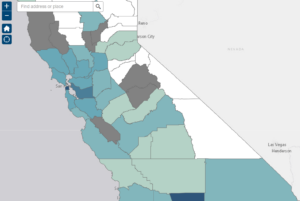
The COVID-19 pandemic has renewed concerns about social and structural factors related to health disparities, including those related to HIV. The Lens tool is a partial response to an urgent need to understand whether elevated risk of COVID-19 disease and mortality among persons living with HIV (PLWH) results from related risk behaviors, a higher burden […]

Read More
2023
Lens: HIV Prevalence and Mpox Vulnerabilities – A Data Mapping Tool

December 19, 2023

The 340b program provides an important revenue source for many HIV clinics and facilities, but that revenue is dependent on drug pricing. The Inflation Reduction Act of 2022 introduced provisions to curb drug pricing. Our modeling suggests that 340b revenues generated from HIV-related prescriptions could decrease by as much as 50% if drug prices are […]

Read More
2023
Impact of the Inflation Reduction Act on the 340B Program

December 4, 2023

Maintaining continuity of HIV care and prevention resources is critical to the health, wellbeing, and at times survival of individuals who rely on those services. In California, disaster events and extreme conditions caused by climate change are becoming more frequent and intense, impacting many regions in what have become cycles of destruction and disruption. The […]

Read More
2023
“Am I going to have to run to get out of this place?” A qualitative study exploring HIV clinical and service provider experiences from California regions heavily impacted by climate disaster

October 25, 2023

A new CHPRC analysis reveals California pharmacists’ preferences for implementing pharmacist-initiated PrEP for HIV prevention under Senate Bill 159. In a discrete choice experiment, pharmacists preferred implementation scenarios in which they play an active role in the PrEP provision process. However, their preferences around pharmacy workflow suggest that integrating new services requires increased workforce capacity.

Read More
2023
Preferences for pharmacist-initiated PrEP implementation in California: Results of a discrete choice experiment

October 20, 2023

A new CHPRC analysis reveals California pharmacists’ preferences for implementing pharmacist-initiated PrEP for HIV prevention under Senate Bill 159. In a discrete choice experiment, pharmacists preferred implementation scenarios in which they play an active role in the PrEP provision process. However, their preferences around pharmacy workflow suggest that integrating new services requires increased workforce capacity.

Read More
2023
Preferences for pharmacist-initiated PrEP implementation in California: Results of a discrete choice experiment

October 20, 2023

Supervised consumption sites (SCS) are harm reduction programs in which people who inject drugs (PWID) bring their previously obtained drugs to consume in a supervised setting. We modeled the potential impact of SCS implementation on HIV and HCV incidence among PWID in three California counties: San Francisco, Los Angeles, and San Diego and found that […]

Read More
2023
Modeling the Impact of Supervised Consumption Sites on HIV and HCV Transmission among People who Inject Drugs in Three California Counties

October 11, 2023